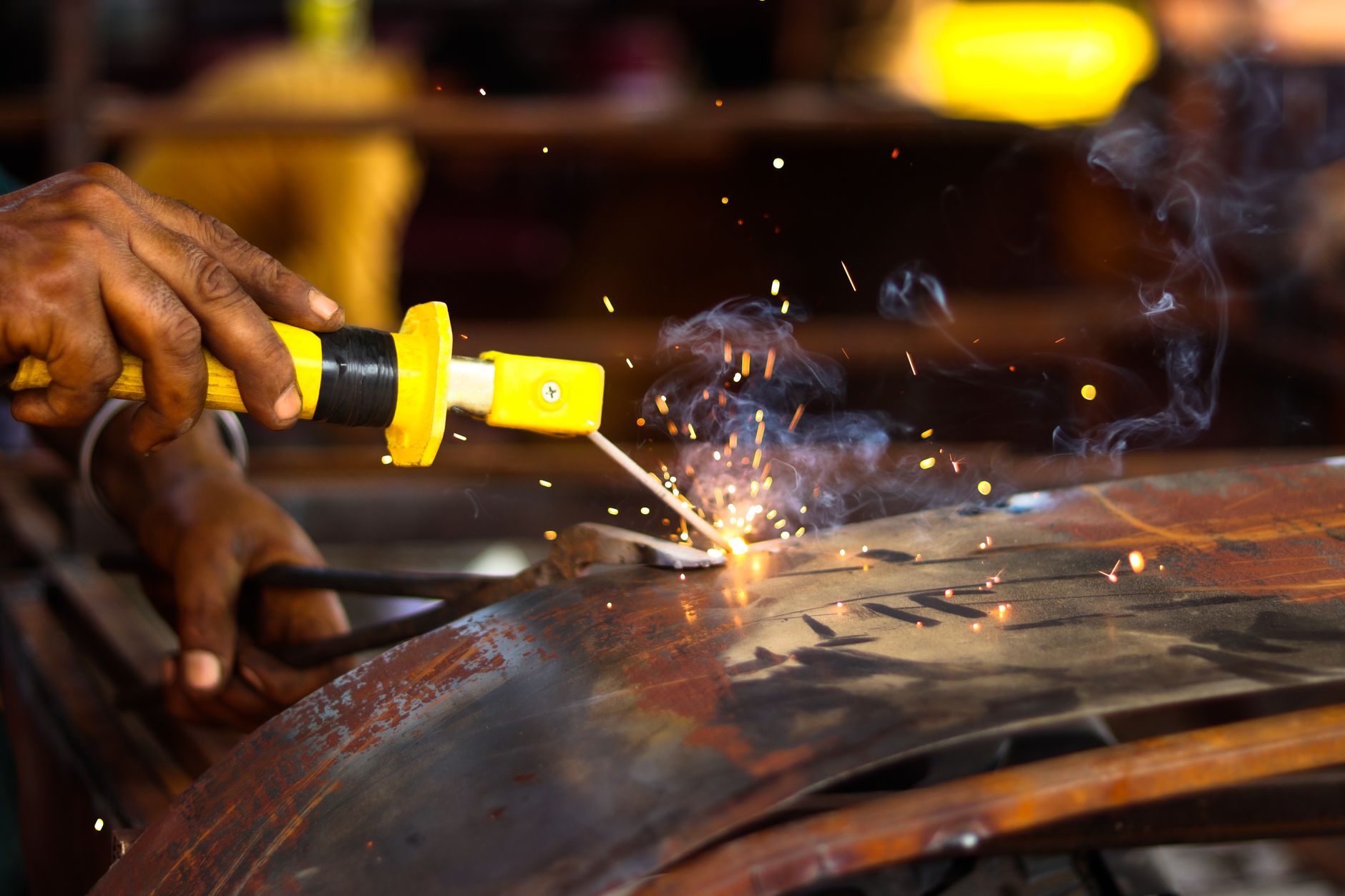
Every welder knows the electrode’s core wire does the melting. But it’s the coating, often overlooked, that truly dictates weld performance. The thickness of this flux coating is a precision science, directly impacting two crucial aspects: arc stability and the ease of slag removal. For welders, fabricators, and engineers across India, understanding this relationship is key to consistent, high-quality welds.
The Unsung Hero: Functions of Electrode Coating
The coating around your welding electrode isn't just protective; it's a complex blend of minerals and chemicals designed to perform multiple vital tasks. It generates a protective gas shield to prevent atmospheric contamination, adds alloying elements to enhance weld metal properties, deoxidizes the weld pool, and most importantly, provides flux that stabilizes the arc and forms a protective slag layer. The precise ratio of core wire to coating – the coating thickness – is engineered for optimal performance.
Coating Thickness and Arc Stability: The Delicate Balance
A stable arc is the cornerstone of good welding. It ensures consistent heat input, proper penetration, and a uniform bead. The coating thickness plays a direct role in achieving this stability. As the coating melts, it releases ionized gases that create a conductive path for the electric current, stabilizing the arc.
If the coating is too thin, there might not be enough flux to generate sufficient ionizing agents or a robust gas shield. This leads to an erratic, wandering arc, increased spatter, and difficulty maintaining a consistent weld pool. Conversely, a coating that is too thick can make arc striking difficult. It can also cause the arc to wander due to uneven melting of the excessive flux, leading to poor deposition and lack of fusion. The ideal thickness, as specified by standards like IS 814:2004 for Indian electrodes, ensures a smooth, focused, and stable arc.
- **Optimal Thickness:** Promotes a concentrated, stable arc column.
- **Too Thin:** Results in erratic arc, excessive spatter, and potential porosity due to insufficient gas shielding.
- **Too Thick:** Leads to difficulty in arc striking, wandering arc, and potential arc blow.
Coating Thickness and Slag Removal: A Clean Finish
After the weld cools, the protective slag layer needs to be removed. The ease of slag removal is directly linked to the coating thickness and its composition. A properly formulated and applied coating will produce a slag that is easily detachable, often peeling off on its own or with a light tap.
When the coating is too thin, there might not be enough slag volume to fully cover and protect the weld bead. The resulting slag could be brittle, incomplete, and adhere stubbornly, making removal difficult and increasing cleanup time. This also risks slag inclusions in the weld. If the coating is excessively thick, it generates an abundance of slag. While seemingly protective, too much slag can lead to entrapment within the weld, especially in multi-pass welds or complex joint designs. It can also result in an oversized, brittle slag that cracks and is hard to manage, affecting the final bead profile.
“A good weld isn't just about melting metal; it's about the arc telling you a story and the slag leaving you a clean page.”
Ensuring Quality in Indian Manufacturing
In India, manufacturers like us at Prakash Electrodes understand these intricacies. Our production processes, based in Kota, Rajasthan, adhere to stringent quality controls, including precise measurement of coating thickness. This ensures that every electrode, whether for structural fabrication or heavy engineering, delivers predictable and superior results, meeting the exacting demands of our welders and contractors nationwide.
Ultimately, the right coating thickness is not a luxury; it’s a necessity for productive and high-quality welding. It dictates how smoothly your arc runs and how easily you clean up, directly impacting your bottom line and the integrity of your work. Always choose electrodes from reputable manufacturers like Prakash Electrodes, where brands like WELDARC and SUNLIGHT-13 are engineered for optimal coating consistency and superior weld characteristics.