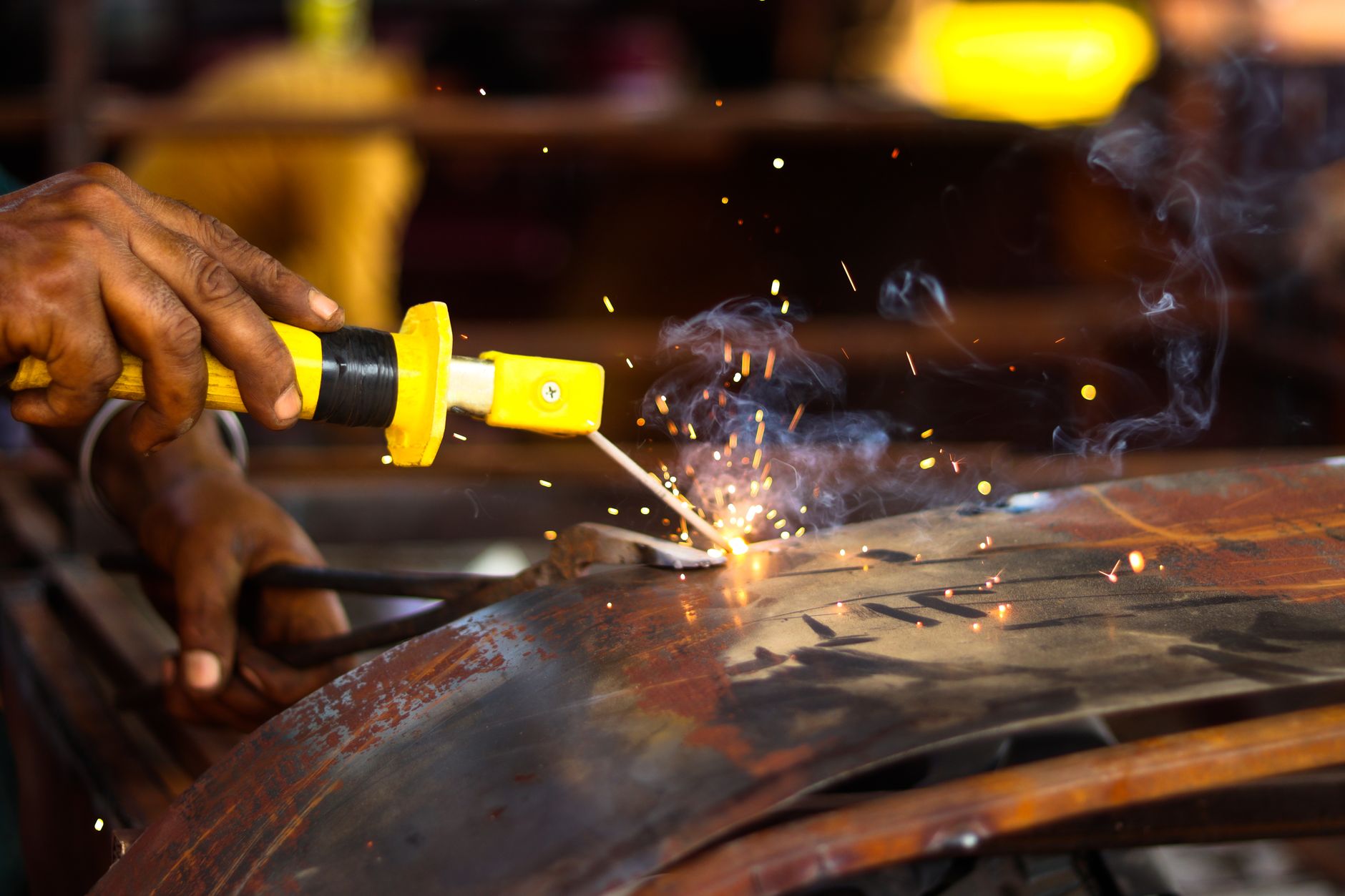
Cast iron components are workhorses in Indian industries, from engine blocks and pump housings to machinery frames and intricate castings. While robust, they are prone to cracking or breaking under stress, impact, or thermal cycling. Replacing these often expensive or hard-to-find parts isn't always feasible. That's where proper repair welding comes in. However, welding cast iron isn't like welding mild steel; it demands specific techniques and electrodes due to its unique metallurgical properties.
Why Cast Iron Is Tricky to Weld
The primary challenge with cast iron is its high carbon content (2-4%), which often exists as graphite flakes or nodules. This makes it brittle and susceptible to cracking, especially during rapid heating and cooling. The material also experiences significant expansion and contraction. Incorrect welding procedures can lead to hard, unmachinable welds, porosity, or even new cracks forming in the heat-affected zone (HAZ) as the weld cools and shrinks.
Preparation is Key: Don't Skip It
Thorough preparation is non-negotiable for a successful cast iron repair. Start by thoroughly cleaning the repair area, removing all rust, grease, paint, and contaminants. Grind out the crack into a 'V' or 'U' shape, ensuring complete penetration. For critical cracks, drill stop-holes (approx. 3-5mm) at both ends of the crack to prevent further propagation. Preheating is crucial; it reduces the thermal shock and stress by slowing down the cooling rate. Preheat temperatures typically range from 200°C to 400°C, depending on the casting thickness and complexity. Monitor temperature with temp crayons or an infrared thermometer.
Choosing the Right Electrode for Cast Iron Repair
Selecting the correct electrode is paramount. IS 814:2004 standards provide guidance, and for cast iron, you'll generally look at nickel-based or nickel-iron electrodes. While steel electrodes can sometimes be used for low-stress, non-machinable repairs with extensive preheat, they are generally not recommended due to differential expansion and contraction.
- Nickel-based Electrodes (e.g., AWS E Ni-Cl): These offer excellent machinability and are ideal when the weld needs to be drilled, tapped, or ground later. They deposit soft, ductile welds that can tolerate stress better.
- Nickel-Iron Electrodes (e.g., AWS E NiFe-Cl): Stronger than pure nickel, these are preferred for heavier sections or when maximum strength is required. The weld metal is stronger but less machinable than pure nickel deposits.
- Steel Electrodes (e.g., AWS E 7018): Use with extreme caution and only for non-machinable, low-stress applications. Requires very high preheat and meticulous technique to avoid cracking. Not generally recommended for critical repairs.
Welding Techniques for Cast Iron
Use the 'skip welding' technique: lay short beads (25-50mm), alternating locations to distribute heat and minimize distortion. Weld in short passes with low amperage. After each pass, peen the weld deposit gently with a ball-peen hammer. This helps relieve residual stresses and reduces cracking. Allow the weld area to cool slightly between passes (but not below preheat temperature) to prevent heat buildup.
“When welding cast iron, patience isn't just a virtue, it's a crack prevention strategy.”
Critical Cool-Down Strategy
The cooling phase is where many cast iron repairs fail. After welding, the component must be cooled slowly and uniformly. Do not quench or allow rapid cooling. Insulate the part with a welding blanket, dry sand, or vermiculite to extend the cooling time over several hours, or even overnight for large castings. This controlled cooling allows the metal to transform slowly, minimizing internal stresses and preventing new cracks from forming.
Repairing cast iron is a skilled job, but with the right preparation, electrode choice, welding technique, and controlled cool-down, success is achievable. For reliable performance under demanding Indian workshop conditions, trust Prakash Electrodes. Our WELDARC series offers quality electrodes, engineered to meet stringent standards like IS 814:2004, helping you achieve strong, lasting repairs.