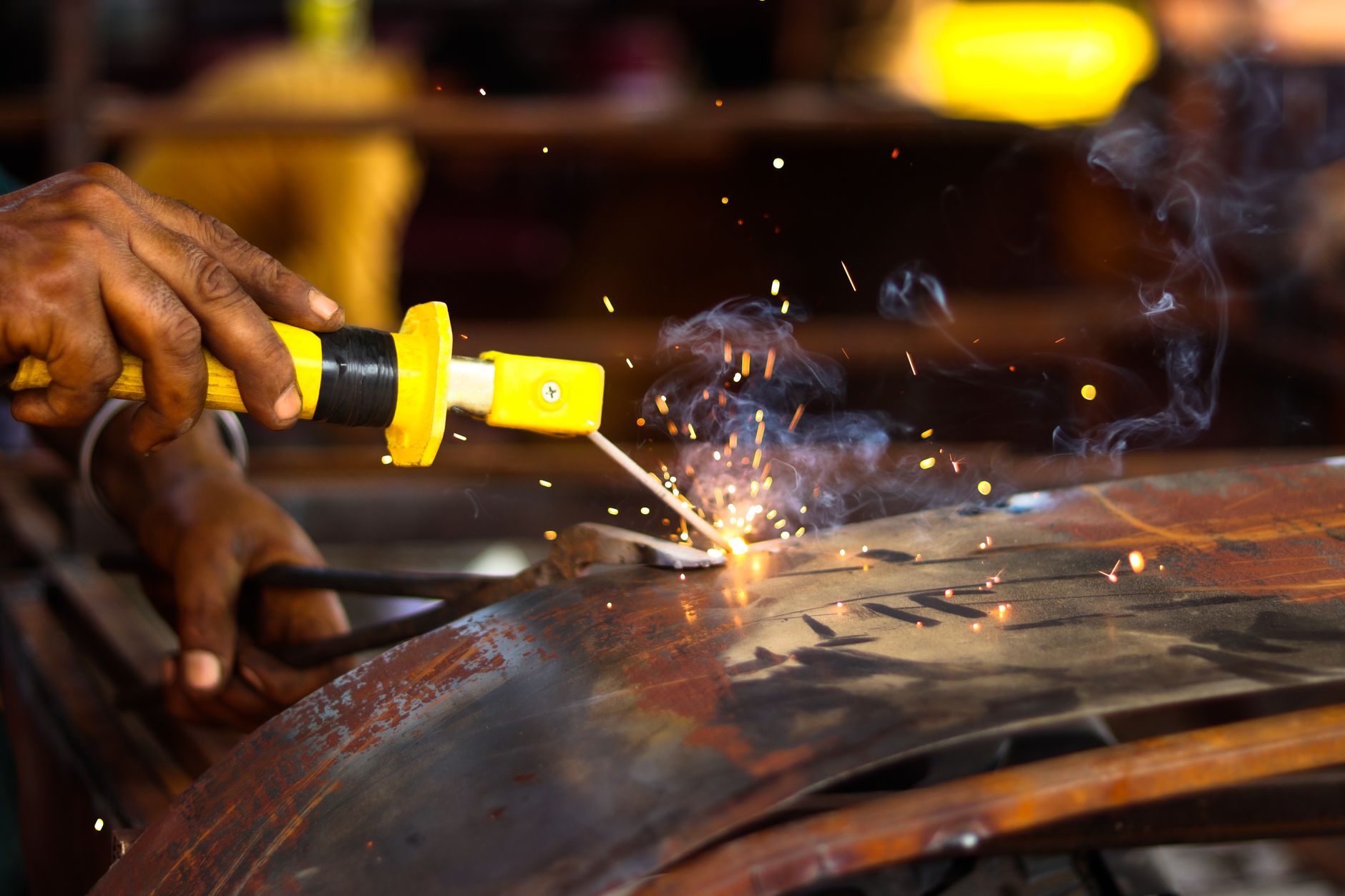
Every welder knows the satisfaction of laying down a perfect bead. But even an imperfect weld tells a valuable story. Your weld bead is a direct report card on your technique – a visual diagnostic tool. Learning to 'read' it can significantly improve your welding skill and efficiency, saving time and material while ensuring stronger, more reliable joints for any fabrication project.
The Foundation: Ideal Weld Bead Characteristics
Before you can spot errors, you need to know what 'good' looks like. An ideal weld bead is uniform in width and height, with consistent ripple patterns. It should show good fusion at the toes, meaning a smooth transition from the weld metal to the parent material, without undercuts or overlap. The color should be consistent, indicating proper heat input. This is the benchmark for quality, whether you're working on structural steel or intricate fabrication in workshops across India.
Common Weld Bead Flaws and Their Causes
Undercut, a groove melted into the base metal alongside the weld toe, indicates excessive amperage, incorrect travel speed, or improper electrode angle. It weakens the joint significantly and is a common quality issue.
Porosity appears as small holes or voids in the weld. Common causes include insufficient shielding gas (for MIG/TIG), contaminated base metal, high moisture in electrodes (for SMAW), or an overly long arc length. Moist electrodes, even high-quality ones, can introduce hydrogen, leading to porosity.
While some spatter is normal, excessive spatter signals high amperage, wrong polarity, an overly long arc, or incorrect stick-out for wire processes. It’s wasteful, requires more post-weld cleaning, and often indicates an unstable arc.
Inconsistent width or height points to fluctuating travel speed, an unstable arc length, or an unsteady hand. A wavy bead often suggests you're not maintaining a consistent electrode manipulation or position relative to the joint.
If the weld metal doesn't properly bond with the base metal or the root, you have lack of fusion or penetration. This is a critical defect, leading to a weak joint. Causes include too low amperage, too fast travel speed, incorrect electrode angle, or insufficient joint preparation.
- Amperage: Too high? Leads to undercut, excessive spatter. Too low? Leads to lack of fusion, poor penetration, high crown.
- Travel Speed: Too fast? Causes narrow, convex bead, lack of penetration. Too slow? Causes wide, convex bead, excessive heat input, potential for burn-through.
- Arc Length: Too long? Leads to instability, porosity, spatter, poor penetration. Too short? Can cause arc extinguishing, stubbing.
- Electrode Angle: Incorrect angle can lead to undercut, lack of fusion, or uneven bead shape.
- Electrode Condition: Damp electrodes (especially low hydrogen types like Prakash Electrodes' HITKARI GOLD) cause porosity and hydrogen embrittlement. Always ensure proper storage and re-baking when necessary as per IS 814:2004 guidelines.
Improving Your Technique: A Practical Approach
Don't get discouraged by imperfect welds. Each flaw is a lesson. Regularly analyze your beads. Adjust one variable at a time – amperage, travel speed, arc length, or electrode angle – and observe the impact. Practice on scrap metal until you consistently achieve an ideal bead. Understanding IS 814:2004 standards for covered electrodes will guide you in aiming for quality that meets Indian industry benchmarks.
“The metal doesn't lie. Look at your weld, and it'll tell you exactly what you did wrong.”
Your weld bead is a powerful diagnostic tool. By diligently observing its appearance and correlating it with your technique, you can rapidly improve your skills and the quality of your work. For consistent, high-quality results, always choose reliable electrodes. Prakash Electrodes, with brands like WELDARC and SUNLIGHT-13, has been supporting Indian welders since 1985 from our base in Kota, providing products designed for superior performance and consistent bead quality. Keep practicing, keep observing, and keep improving.